 |
| Comic and comedian |
[comic, n.]
...A comic actor; = comedian....
. . .
1961 J. McCabe Mr. Laurel & Mr. Hardy (1962) i. 38 ‘Stan,’ he said, ‘why do you want to be a comic?’
—Oxford English DictionaryWhenever you enter into a dispute about the meaning of a word or phrase, you’ve entered a mine field. That’s partly because a word, even one approached as appearing in a snapshot of the present (as opposed to: as a thing traveling across time), doesn’t exist in one community but in many overlapping communities.
And then there are philosophical issues that enter the
picture. Sheesh.
It’s easy to make a case that the noun “comic” and the noun
“comedian” are synonyms. In making that case, however, you rely on standards
that are clunky and insensitive: dictionaries and the like, things that require
so much work that their issue is sporadic and occasional. There just isn’t the
manpower to keep on top of swiftly moving subtleties, on so many fronts, in usage. (For instance, see the OED's definition of "begging the question" below.)
CONSERVATIVES. People disagree about how to conceive the meaning of a word. Some tend to tie meanings down to some alleged essence: the “original” meaning or some “official” act of standardization by authorities. That approach isn’t always wrong (in my opinion), though (again, in my opinion), it usually is.
That’s what I think anyway. More about that later.
"Conservatives," in this narrow sense, are, of course, more liable to insist on the "correct" meaning of a term of phrase. If words have essences, and given that word meanings tend to change, well, then, obviously, there will be divergences from those essences and thus reasons to squawk.
FREE-FLOATERS. In general, I’m happy to view meanings as detachable from
any such essential basis. I certainly see the point of conservatism—insisting on a particular "real" meaning or distinction in
the face of drift (or inadvertent invention) among the hoi polloi. For instance, there’s a good reason for maintaining
the distinction between, say, “inferring” and “implying” when many others routinely obliterate the distinction.* And there's a good reason to maintain use of the word "phenomenon" to refer to any observable event—even as every element of popular culture (it seems) persists in using it to refer to the paranormal.
Typically, in these struggles, the conservatives eventually loose to the masses, overwhelmed by shear usage. When that happens, continued conservatism is just silly.
Typically, in these struggles, the conservatives eventually loose to the masses, overwhelmed by shear usage. When that happens, continued conservatism is just silly.
Take the “misuse” of the phrase “begging the question.”
True, current usage is obliterating a valuable customary** meaning, thereby making the English language
less rich and expressive. But the new usage is by now so familiar and widely
accepted that, with few exceptions (e.g., my classroom), it is pointless to keep insisting on “the correct meaning.”
RIGID DESIGNATION. When I was a philosophy student, a battle raged over how
best to understand proper names. Are they disguised descriptions or are they “rigid designators”? That is, when I speak of Socrates, am I essentially referring to the teacher of Plato? (That’s a description, a "sense.") If so, then it would be nonsensical to suggest that Socrates never knew Plato. Necessarily, the "teacher of Plato" knew Plato.
Alternatively, might it be that, in truth, “Socrates” refers (because it originally referred) to some humble, unreflective fisherman and, owing to a confusion, we’ve ended up referring often to this peasant, erroneously supposing that he was a great and influential philosopher (who taught the likes of Plato)? Here, the term is causally linked to the person originally "christened" with it, and thus no description is essentially tied to it. Accordingly, it is coherent (albeit controversial) to suggest that Socrates never knew Plato.
This view may seem crazy but, in some instances, it seems correct.
 |
| The "fuzzy" look |
That's an absurd view. Suppose that, originally,
“fuzzy” was used to say that a thing had spikes. But language changes, and now we have something else in mind by "fuzzy." Surely it
would be a mistake to insist that, when Uncle Ted said he shot the fuzzy bear,
he was “really” saying was that he shot a spiky bear. –No, he was saying (and he was "really" saying) that
he shot that other kind of bear, the fuzzy kind. That the term "fuzzy" once meant "spiky" is simply irrelevant. The meaning of a term is what people mean by it, not what people long ago meant by it.
(Of course, some scholarly communities comprise those who use terms fully cognizant of [at least some of] their histories. For them, subtly, word histories somewhat intrude on meaning—i.e., what they mean by words now. They play with words, gently sounding their histories, like strings on a guitar.)
(Of course, some scholarly communities comprise those who use terms fully cognizant of [at least some of] their histories. For them, subtly, word histories somewhat intrude on meaning—i.e., what they mean by words now. They play with words, gently sounding their histories, like strings on a guitar.)
SEMI-CONSERVATIVES (SEMI-FREE-FLOATERS). I think that one could justify taking a semi-conservative view.
Perhaps it’s like this: words (and phrases, etc.) tend to change in meaning over
time, a phenomenon that (at least sometimes or to a degree) parallels natural
selection, “improving” the language. But the process can also be insidious. Useful meanings (e.g., “begging the question”—as the phrase was used fifty years ago) are sometimes gradually erased in favor
of a minor (or a non-) enrichment of the language. At such times, there's a net loss for the language. Under these circumstances, for the sake of
maximal communication, especially within, say, some specialist group (philosophers, logicians), it would make sense to
attempt to hold the line at least for a while (for the sake of clear and effective communication), to insist on the “traditional”
meaning (i.e., the meaning they've recognized for a while, whether or not it was the "original" meaning). I used to do that in my philosophy classes. I was quite the traditionalist, word-wise.
Suppose that one has lost the battle with regard to the "ordinary meaning" of the term. Suppose that efforts to preserve the once-traditional meaning of "begging the question" (BTQ) as "the" meaning are a failure. Virtually no one, outside a special group, recognizes the once-traditional meaning. The special group would of course preserve this (now) specialized meaning, though it would not insist on that meaning outside the narrow group.
This appears to be the fate of the term "begging the question." What was once simply "the meaning" of BTQ becomes the meaning of BTQ only as a technical term. Meanwhile, owing to an error that became viral, a (non-technical) meaning of BTQ ("the" meaning in broader society) has been established.
It’s still true, I think, that, among educated speakers, “infer” does not mean “imply,” and that’s a good thing, though it does separate people into the "educated" and the "uneducated." As college instructors, we engage in such segregations every day. As educators, we're part of a crew that participates in the enterprise of preserving the language and maintaining its power. Some publishers and publications, I think, view themselves as part of this crew. They do what they can as "Meaning Police." That's not always conservative. The MPs, while preserving the useful, can also admire innovation.
Alas, as preservers of the useful (etc.), they are only slowing the inevitable. In time, of course, "infer" will simply mean "imply." The
educated elite (if that group continues to exist) will probably have to throw in the
towel and speak and mean like everyone else. To do otherwise would be ridiculous.
* * *
[beg]
6. To take for granted without warrant; esp. in to beg the question : to take for granted the matter in dispute, to assume without proof. . . . 1788 T. Reid Aristotle's Logic v. §3. 118 Begging the question is when the thing to be proved is assumed in the premises.
—Oxford English Dictionary; note: this is the only meaning OED recognizes.
— beg the question 1 : to pass over or ignore a question by assuming it to be established or settled 2 : to elicit a question logically as a reaction or response
—Merriam-Webster Dictionary
* * *
Earlier, I suggested that one can make a “conservative” case
for the synonymity of the nouns “comic” and “comedian.” Dictionaries will tend
to support this position.
I don't want to get into the weeds about the latter point. I'm thinking of a particular dispute.
Yesterday, my mother, my sister, and I were discussing the old Ed Sullivan Show, a popular program that lasted until about 1970. Mom said that she watched some old episodes. She referred to the old "comics" on that show. She referred to one in particular, a woman.
"Joan Rivers?" I asked.
"Yes, she was one of them. But there was another one."
We attempted to identify the comic. I mentioned all of the female comics I could think of from the 50s and 60s: Phyllis Diller, Totie Fields, et al. Mom wasn't thinking of any of those, she said. Eventually, knowing that my mother can use words eccentrically (for her, English is a second language), I decided to mention some comedians.
"Are you thinking of someone like, say, Carol Burnett? Lucille Ball?" I asked.
I added: "of course, they aren't really comics."
Uh-oh.
My mother looked at me blankly. My sister joined in this. "Of course they're comics!" said sis.
No, I said. Burnett was a comedian all right, but she's wasn't a comic. Neither was Lucy.
They were uncomprehending, or simply unconvinced. Luckily, the conversation ended there.
So that's the dispute.
* * *
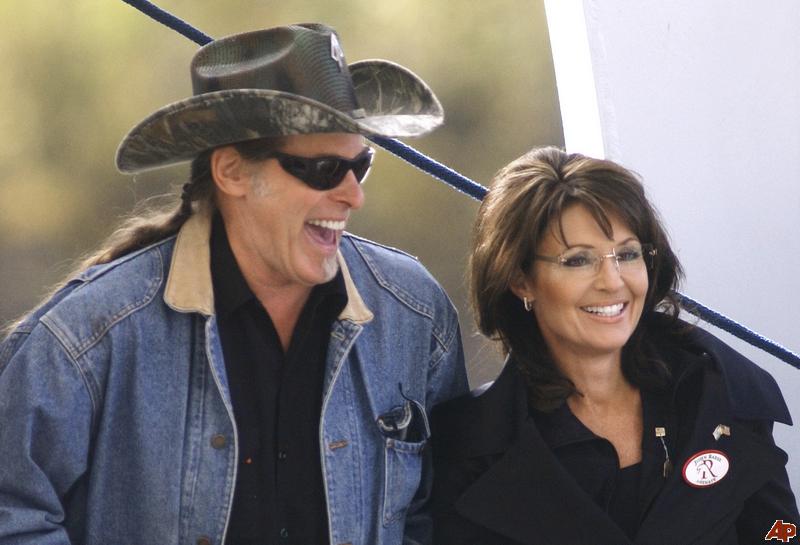 |
| Uncle Ted and friend |
It’s easy to find people—estimable people—who insist
that there is an important difference between the term “comic” and the term
“comedian.” Comics are one group, comedians are a somewhat different group.
Are they wrong and the lexicographers right?
Are they wrong and the lexicographers right?
Here’s an example from someone from the world of stand-up comedy:
A comic is a comedian; a comedian isn’t necessarily a comic. It’s the square and the rectangle argument (for nerds who remember geometry AND read this blog).
This entry is dedicated to defining and understanding the differences between a comic, which is short for stand-up comic, and a comedian, who performs comical material.
Stand-up comedy is the art of standing on stage and performing material to elicit laughs from the crowd.
. . .
“Comedian” is a much broader term. A comedian is someone who performs comedic material in order to elicit laughs. This can be accomplished through acting in movies. Examples of movie actors who are comedians would be Bill Murray or Tom Hanks. It can be accomplished through funny songs, such as done by artists Weird Al Yankovic or Dr. Demento. A comedian can host a variety show, like Conan O’Brien or David Letterman. It can be established through a radio show, like Howard Stern. Comedians can also perform team improvisation/“improv”, like on “Who’s Line is it Anyway?” It can even be accomplished by doing stand-up comedy. Here’s where the square/rectangle argument comes into play.
You’re considered a comedian if you’re doing any performance that gets a laugh, including stand-up comedy. However, you are ONLY considered a comic if you do stand-up comedy.
. . .
…[S]tand-up comics develop unique skills in order to prep and deal with the live-audience environment. While being a comedian also involves a lot of skill and practice, the difference is dependent on having a cast, a script, and, often, being able to reshoot/re-do scenes that don’t work the first time. Ultimately, as a stand-up comic, if you fail on stage, the only person you have to blame is yourself. The flip side of this, of course, is that when you succeed on stage, the only person responsible and deserving of praise, adulation, and the great things that come with success is yourself. (Comic vs. comedian: what's the difference?)
Here’s another example from someone outside the world of stand-up comedy (and even outside of the English speaking world!):
Every comic — now a term exclusively reserved for stand-up — has had to face boos, catcalls, hecklers and even legal notices. (Comic Vs Comedian.)
I think that these people are part of a community (or, in the second case, have significant exposure to such a community) where a particular distinction between “comic” (a
kind of comedian) and “comedian” (the more general term) has come to exist and to be important. Without doubt, in their world, this difference in meanings exists.
And the likes of me—we've tapped into that community's conversation, have to an extent adopted its language. My guess is that the larger society is gradually doing the same.
But who knows.
And the likes of me—we've tapped into that community's conversation, have to an extent adopted its language. My guess is that the larger society is gradually doing the same.
But who knows.
Does that make this usage correct and the approved “dictionary” usage
incorrect? Well, yes and no. There are settings where I’d have to agree—"yes,
for you people (scholars at Oxford?), 'comic' and 'comedian' are synonyms. There's no good reason why you should adopt this newer usage—though, of course, you should be aware of it, if you're going to listen to and communicate with those who are tapped into popular culture." (If they're Oxford dons, that's not likely to be the case.)
But I would say that, being a non-conservative about such
matters.
*We can distinguish at least two different kinds of case: (1) There exists an established meaning (of X) and then, somehow, a new meaning crops up and competes with it (such seems to be the case with "begging the question"). Here, we're inclined to speak of "error" or perhaps neologism; (2) there are two distinct communities and one meaning (of X) is embraced by one community while another meaning (of X) is embraced by the other. I suspect that the "infer/imply" situation involves the second kind of case. The "educated" have their meaning; the uneducated have theirs. Neither error nor neologism is involved. Consider also the situation with regard to the distinction between inductive and deductive arguments—conceived differently between philosophers/logicians, on the one hand, and rhetoricians, on the other. (No, philosophers and logicians do not define a "deductive" argument as going from the general to the particular.) I have found that many philosophers/logicians are not shy about placing this particular meaning difference in a third category, related to the first: (3) changes (improvements) are made by the proper authorities in defining X but, unfortunately, some group persists in using the outdated meaning. See for example the Internet Encyclopedia of Philosophy, which asserts: "It is worth noting that some dictionaries and texts improperly define 'deduction' as reasoning from the general to specific and define 'induction' as reasoning from the specific to the general. These definitions are outdated and inaccurate."
**Customs can exist in isolation, of course. The logician's use of the word "valid" has long been customary in philosophy/logic, but that custom is unknown to most speakers of the English language. As near a I can tell, the phrase "begging the question" long had its home in the fields of logic (etc.) and rhetoric. At about mid-century, however, persons outside those fields picked up the phrase, misunderstanding its meaning, giving it a new meaning. The new meaning spread like wildfire and is about to choke out the old one entirely. Now, there are very few places where I can say that a speaker or writer has "begged the question" (as logicians understand this) and be understood.
SEE ALSO:
The deductive/inductive distinction
Realism vs. nominalism
Essentialism
The meaning of "argument" (rhetorical, logical)


